"That Never Happened"

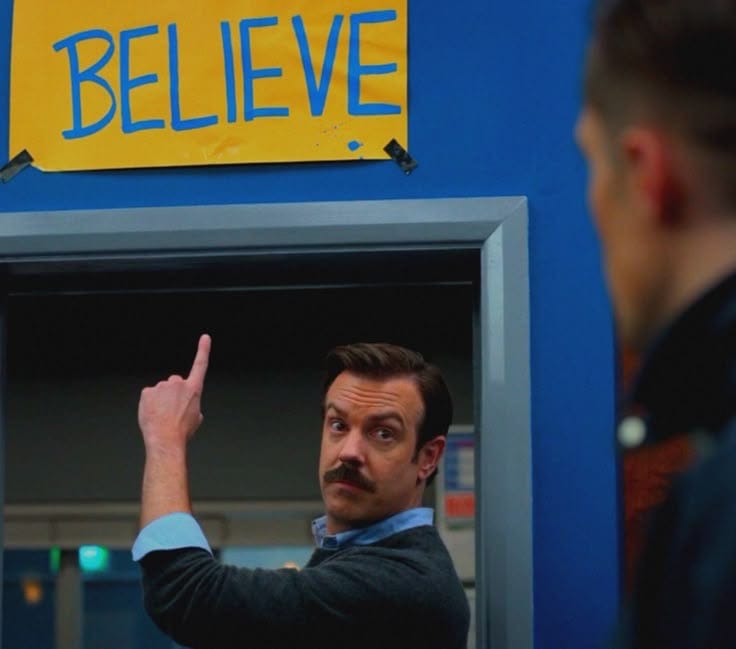
Belief and validation are powerful. Unfortunately, so is denial.
Hi (No) Wonder-ers,
If you are looking for 41 more books to add to your books to-be-read (TBR) pile, I wholeheartedly recommend Sir Terry Pratchett's Discworld series. Sir Terry's humor, heart, humanity, and sneaky profoundness make this series a treasure.

The 13th installment, Small Gods, touches upon the themes of gods, religion, and religious belief. Reading this makes it clear that Sir Terry studied and explored these topics in exhaustive depth, which I suspect is the reason why he identified as a secular humanist.
On the Discworld as well as our Roundworld, people like to believe that their god(s) are all-powerful; however, gods stop existing once there are no believers. Thus the state or condition of not being believed is, to a god, an existential threat. In the interest of avoiding spoilers, this is an important aspect of Small Gods.
Belief. Anything that can make or break a god is powerful stuff.
The suffering many people (predominantly women) experience stems from not being believed: medical gaslighting ("Your symptoms are in your head"), underreporting and delayed reporting of sexual assault, systemic -isms/-phobias (sexism, racism, transphobia, homophobia, ableism). It's beyond demoralizing and deflating to live through any of these, and vulnerably speak up about them, only to be told that your lived experience never happened, you made it up, your feelings about it are unjustified. When people deny our lived experience, because they find it inconvenient and/or inconsistent with their internal narrative, it adds insult and invalidation to injury.
Coming from an anonymous internet rando, the insult and injury of invalidation may amount to a mere annoyance, like a neighbor's barking chihuahua. However, coming from someone expected to love and/or protect you (e.g., family, law enforcement), it can sting deeply and undermine the foundation of those relationships. Having a sour relationship with those who denied your reality doesn't make you bad, ungrateful, or any adjective other than "human."

Denying other people's lived experience with harsh realities offers an illusory comfort and convenience, cloaked in a "healthy skepticism" that's anything but. When we dismiss someone's lived experiences with chronic illness with "it's all in your head," we practice lazy doctoring that serves only ourselves, sparing us the cerebral, academic, and emotional effort of truly addressing complex problems. When we dismiss sexual assault victims as liars, we spare ourselves an uncomfortable look into the sexist culture that makes this more likely to happen. When we white people dismiss black and brown people's lived experiences with systemic racism, we avoid the discomfort of addressing the problem - as well as the discomfort of potentially losing unearned "benefit of the doubt" privileges.
Simply put, it's a hell of a lot easier and more convenient for us to deny other people's reality than it is to engage in the uncomfortable, inconvenient process of acknowledging and rectifying it. That's why so many people do it.
Many of us have been conditioned to think that comfort and convenience are worthy goals. Comfort and convenience can be wonderful things, and I appreciate creature comforts of modern living every bit as much as the next guy.
But I encourage caution when it comes to seeking comfort through avoidance and denial of harsh realities, especially when presented as personal lived experiences.
When people share their lived experiences with harsh, unjust realities to those fortunate enough never to have lived them, it is uncomfortable and inconvenient for the latter - and that is a GOOD thing. Another human's lived experience with illness, violence, bigotry, and other injustices absolutely should make us uncomfortable enough to do something meaningful about it.
Even if the "something meaningful" is simply acknowledging the problem and validating it. "I hear you, I'm sorry that's happening" is more powerful than it sounds.
Don't Stop Believing,
Merrit